The process uses the SHM’s rules to evaluate a submitted heading. For the rules that can be programmatically checked, like if a heading may be subdivided geographically, they have been programmed into the system. For judgment based rules it calls to the LLM with the specific rules to decide the confidence of how valid a heading appears to be.
This flow chart outlines the steps the process goes through to validate a heading using the SHM:
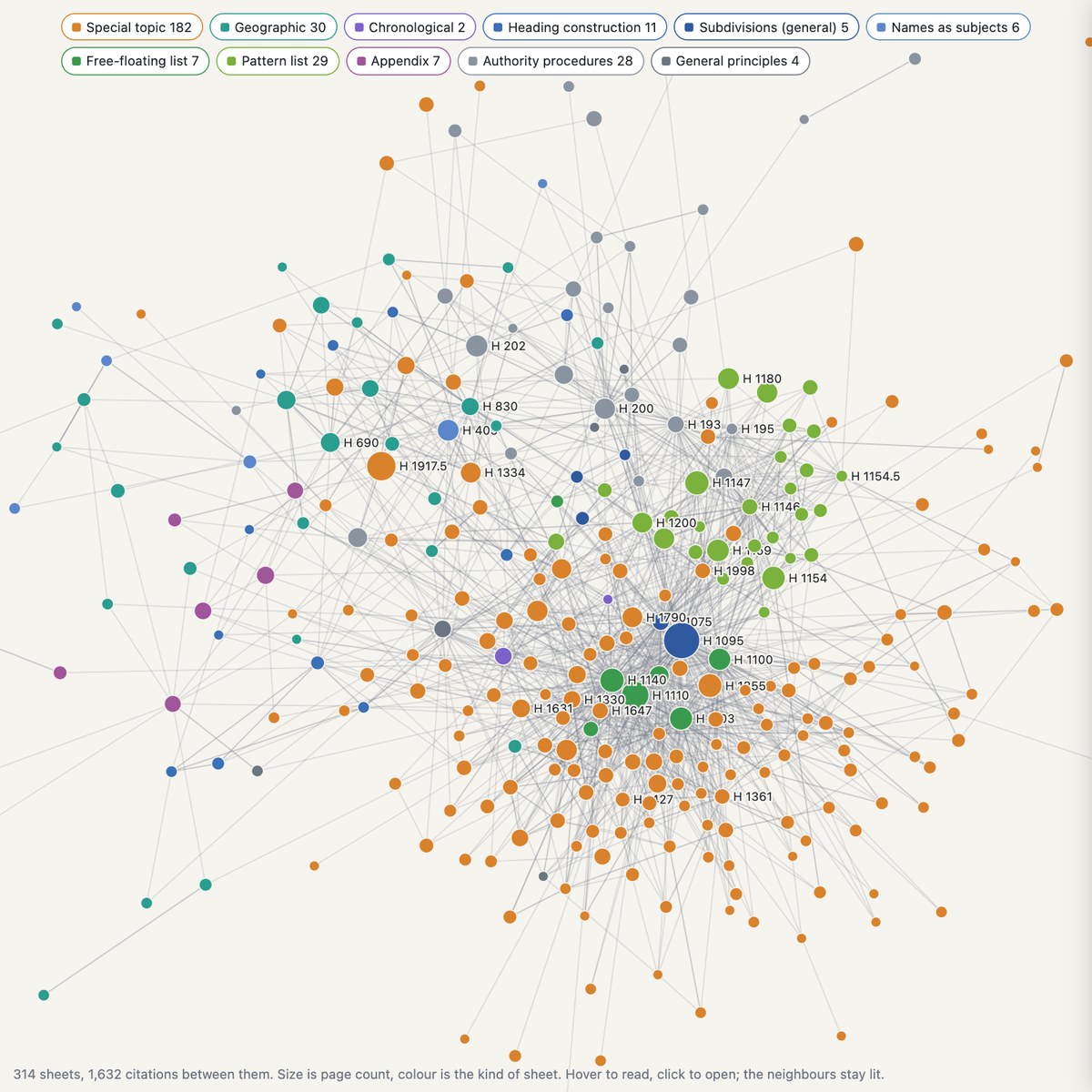
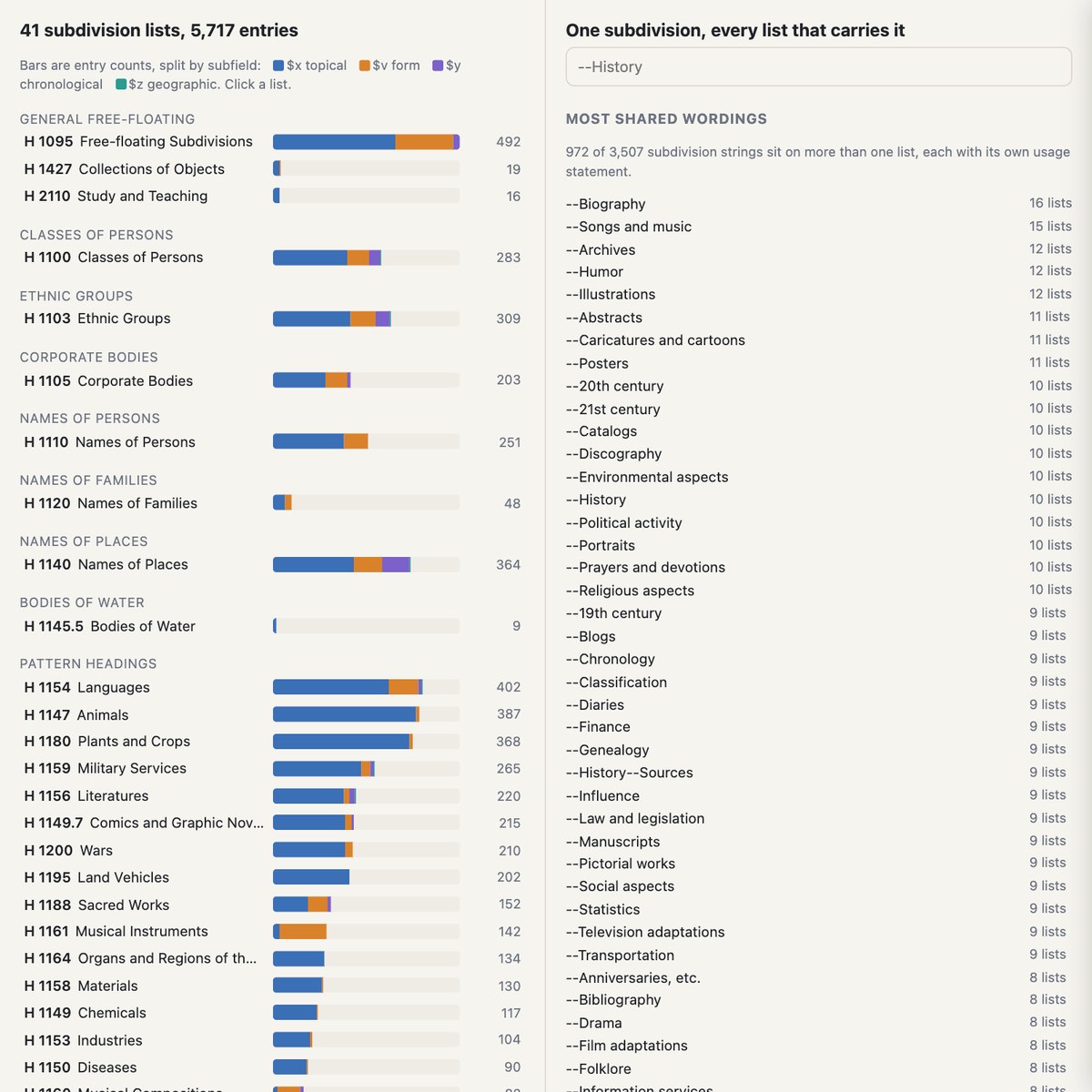
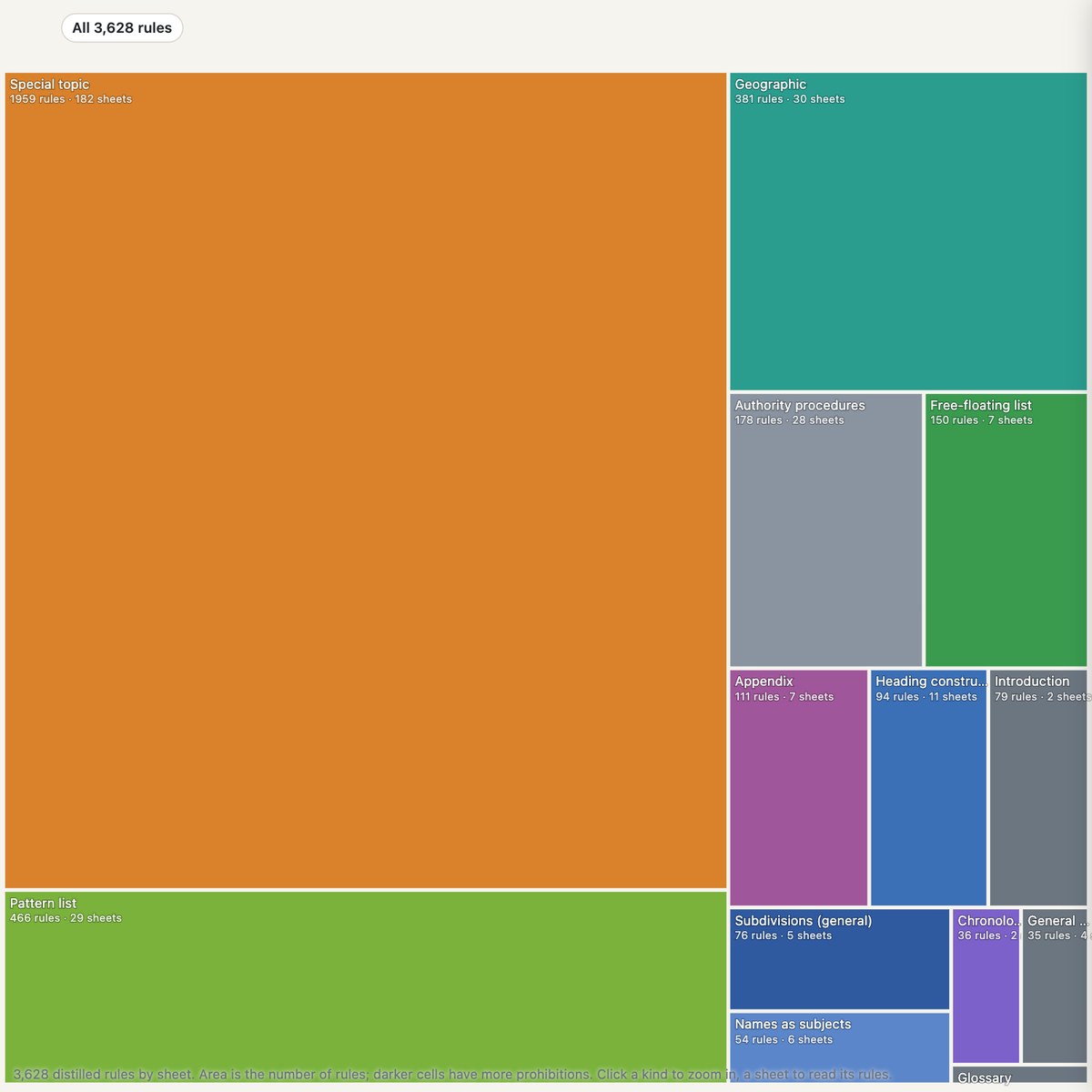
The 1600 pages of the SHM are mostly lists covering special topics about when a heading can be used and when it cannot be used. These rule sheets often reference other rules creating a network of references.
In addition to the SHM the tool also references 519 summaries from the SACO editorial meetings (the editorial group for managing LCSH headings). These summaries record thoughts on over 1000 string pre-coordination decisions. If there is a debate about a construction used it is settled in these decision papers. For example:
Should not be allowed because the free-floating “--Law and legislation” entries do not name crimes as a category it can be used with. But at the 2014-02-17 meeting it was decided that “--Law and legislation” may be used under headings for crimes and categories of crimes, such as “Murder--Law and legislation” and “Computer crimes--Law and legislation”. The tool then needs to know these decisions and it keeps all of them compiled to be able to pull up references to the decisions made when it is validating a relevant heading.
The system also works on a confidence rating 0-1 meaning that it is possible to get three results from it, valid, invalid and questionable. Questionable results occur when the model is not sure in its judgement call based on the rule reading and what is being tested. This aligns with the idea of cataloger’s judgement, there are some gray areas which the model cannot be 100% sure so there is the ability for it to simply flag it as potentially problematic based on how the rules are being applied to it.
So what would this tool be used for? It is not unfair to say LCSH is a complicated system. There are a lot of moving parts to check to make sure a heading is valid. For a professional cataloger this is second nature to them but simply having a validator to double check it seems like a good fallback. Validation is always part of building a catalog record so why not validate the subject headings? It also seems like a good tool for learning the intricacies of LCSH. There is a cost associated with it, not every check will invoke the LLM but if it does it will cost around $0.002 per heading (fifth of a cent) or around a dollar for 500 headings validated.
Of course the question of how accurate it can be is important. To test for false positives I ran 1000 authorized pre-coordinated headings through the test. These are complex headings that have been published (there are about 200K of them, you can browse them here). These headings should always be valid, since they are authorized in the authority file. To test them I hid their authority records from the tool, so it wouldn’t see they are authorized and therefore correct and then asked it to validate the string. Out of the 1000 authorized headings 5 of them were flagged invalid, of those 4 of them really should be invalid but were authorized anyway (e.g. Vocal music--To 1800 period is not on the music period list or Military supplies--Japan, Military supplies is not coded for geo subdivision but the authorized heading was made anyway). It did mistakenly mark one of these valid strings as invalid: Prostate--Cancer--Pathophysiology. The model treated “Prostate--Cancer” as a heading "of the type [part of the body]--Diseases", and the diseases sheet bars “--Pathophysiology” under that type. It was wrong because that bar applies to the literal subdivision “--Diseases”, not to a specific disease like cancer. So it over fit a rule and marked it as invalid, with this error the tool sits then at 99.8% for this test. Doing the opposite test, running 580 known invalid headings it caught 579 resulting in the same 99.8%. I would not say the tool is perfect, there is always a risk if a tool invokes a LLM for judgment, but there are a lot of guardrails in place to keep the likelihood for false results low. The most likely error would be the tool returning a “Questionable” result, which is more of a soft error than being confidently wrong.
In closing I think this is a “good” example of GenAI usage in cataloging because:
- It is not cataloging for the user, it is validating their work. Helping to find mistakes.
- It is scoped to a specific task that is very well defined. Not “build me a catalog record claude”
- There is no black box, the LLM is not generating random decisions based on its model, it is making judgements with built in guardrails based on supplied cataloging rules.
The source code for the validator can be found in this Github repo.